![[Translate to English:]](/media/ti-themenfelder/Boden/Gefroren_Fokus.jpg "[Translate to English:]")
In focus
Intact soil despite heavy machinery
17 December 2025
Soil compaction is almost invisible – but its consequences for soil health and yields are all the more serious. Our expert article shows how farmers can counteract this.
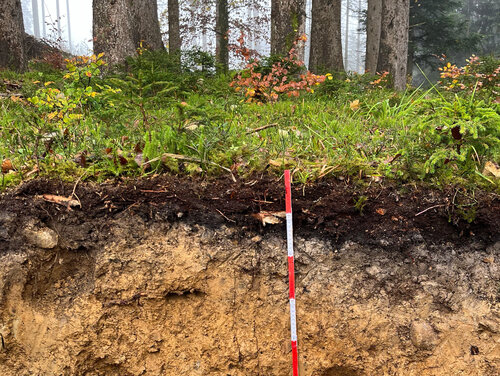
During the dry years, Germany's forests largely lost their function as carbon sinks. Now it has become apparent that the forest soil compensated for almost all of the negative effects during this period, thus taking over the sink function of the trees. Scientific models must therefore be adapted for…
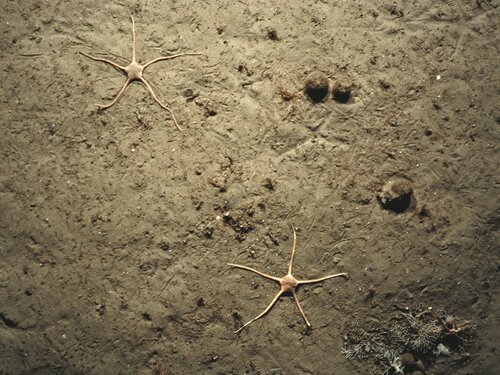
Extreme events change the ecology of oceans abruptly: For example, a marine heat wave in 2003 had such strong effects on species composition and trophic interactions of the subpolar North Atlantic that these impacts last until today. Researchers led by the Thünen Institute of Sea Fisheries in…
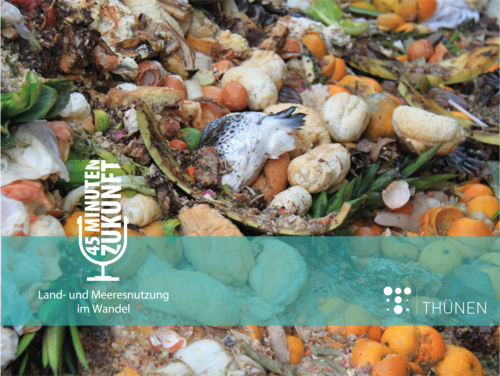
Millions of tons of food end up in the trash every year—at the expense of the environment, the economy, and society. In this episode, we talk about which social structures contribute to this and how we can achieve a more sustainable approach to food.
The Thünen Institute.
Research and policy advice on rural areas, agriculture, forests and fisheries.
As a research institute in the portfolio of the Federal Ministry of Agriculture, Food and Regional Identity (BMLEH), we work at the interface of science, politics and society.
- 1 180
Employees, 651 of them scientists
- 15
Institutes conduct research in the fields of rural areas, agriculture, forestry and fisheries
- 1 178
Lectures in 2024
- 1 046
Publications in 2024
KnowledgeSnack
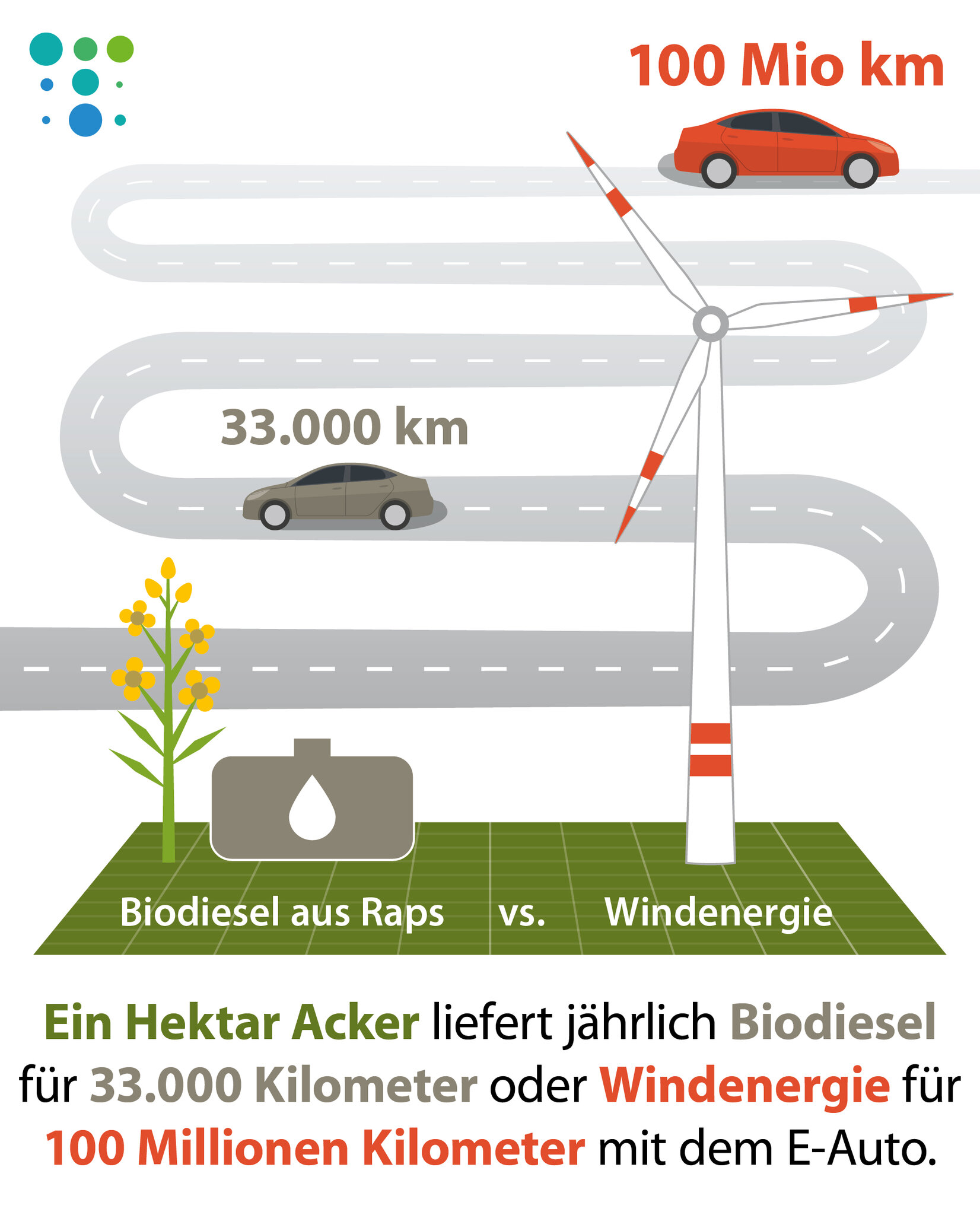
Energy from the field. How much energy a hectare of land provides depends heavily on how it is used. A Thünen study shows that wind power and solar power are significantly more efficient than bioenergy. A car can travel around 3,000 times further on wind energy than on biodiesel from rapeseed. Similar differences also exist in electricity and heat production.
To Wissenschaft erleben (only in German)
New publications
- 0
Hong C, Levers C, Prishchepov AV (2026) Revealing nested archetypes of cropland abandonment based on social-ecological system theory. J Rural Studies 122:103991, DOI:10.1016/j.jrurstud.2025.103991
- 1
Herrmann B, Santos J, Sistiaga M, Brcic J, Karlsen JD, Melli V, Sala A, Veiga-Malta T, Brinkhof J, Petetta A, Yu M, Lomeli MJM, Cuende E, Feekings JP, Krag LA (2026) Rebuttal to the response by Millar and Broadhurst. Fish Res 293:107577, DOI:10.1016/j.fishres.2025.107577
- 2
Felle TK, Emmerich L, Humar M, Brischke C (2026) Impact of fungal decay on the structural integrity of wood. Eur J Wood Prod 84(1):11, DOI:10.1007/s00107-025-02359-0
- 3
Pedersen J, Hafner SD, Pacholski AS (2026) Methodological factors affecting ammonia emission measurement with flux chambers from field-applied biogas digestate slurry (Technical note). Atmos Environ X 29:100408, DOI:10.1016/j.aeaoa.2025.100408
- 4
Abayneh Ayele H, Margarian A, Weible D (2026) Grounds for growth? Institutional mechanisms of value chain upgrading in Ethiopia's coffee sector. Dev Pol Rev 44(1):e70047, DOI:10.1111/dpr.70047